
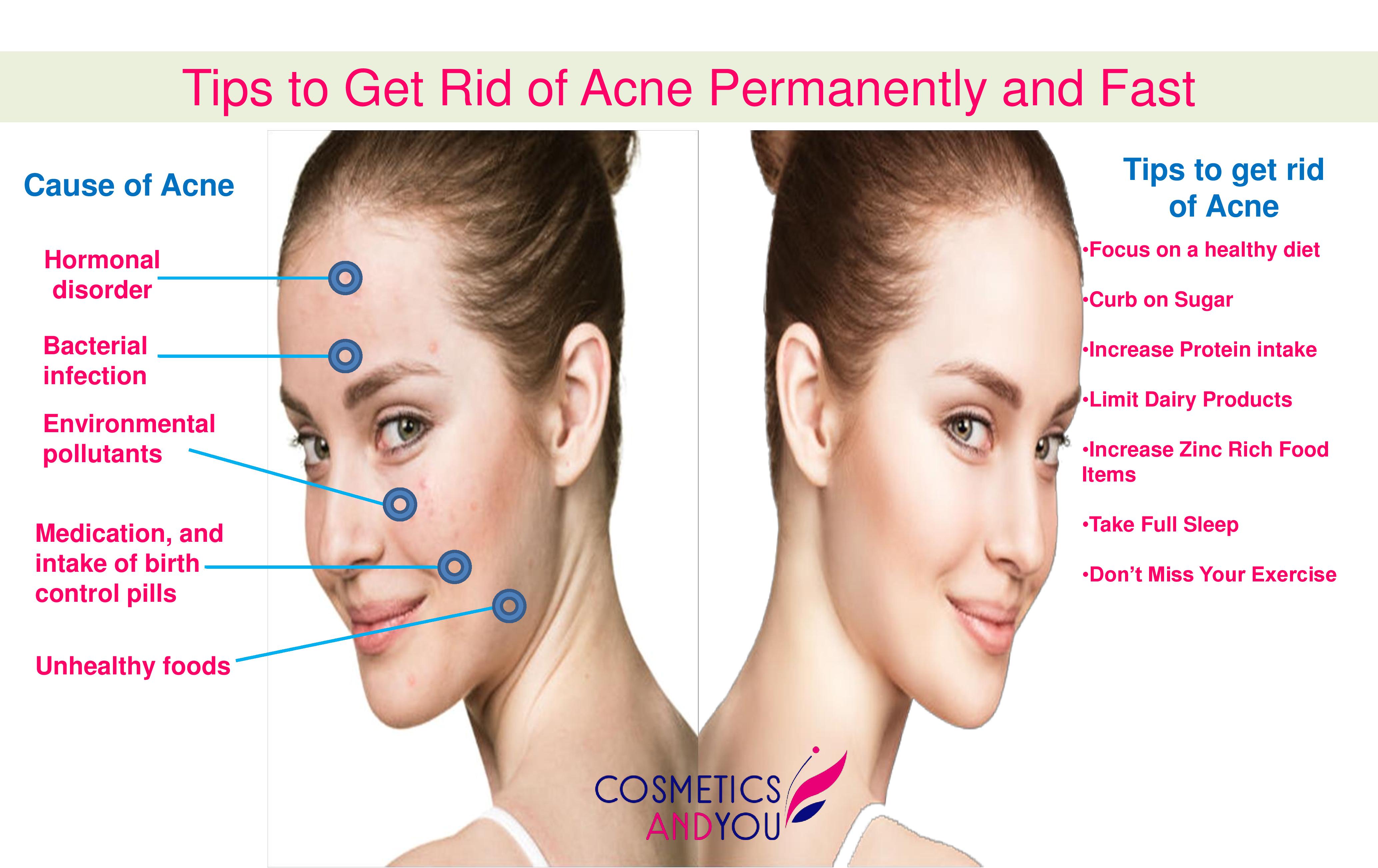
Acne is one of the most embarrassing and painful conditions a teenager or young adult can have. There's many myths about how acne is caused and just as many about how to effectively get rid of it. One such myth is that you can get rid of acne fast. Don't get your hopes up when you read that something can get rid of your acne overnight; it can't. However, there are ways to diminish the appearance of acne and relieve the pain associated with it.
1. Remove acne the careful, sterile way: By puncturing a whitehead with using two Q-tips, or by sterilizing a needle in isopropyl alcohol or hydrogen peroxide and puncturing the head of a zit, you can get rid of your acne pretty fast. Never squeeze with your fingers, and if you start to see blood coming out the pore instead of pus, stop poking!
Cleanse your pores after popping them. Using a cleanser with exfoliating beads, salicylic acid, or benzoyl peroxide are all great options.
2. Use benzoyl peroxide every night: Apply a cream or lotion of at least 2.5% benzoyl peroxide every evening before going to bed. This is best done after you cleanse and dry your face.
3. Consider some of the most popular dermatology treatments available. Some of them aren't as expensive as you might think. For $60, you can get a chemical peel, and most dermatology clinics offer microdermabrasion treatments for $80 each.
Neither chemical peels or microdermabrasion are painful procedures, nor are they invasive. They take very little recovery time, and neither of these cause bleeding.
4. Apply homemade skin facials when necessary. Once a week, one great peel to use is a Vitamin C peel. It's very simple to make; all you have to do is grate 2 tablespoons of orange peel with 1 tablespoon of water. Mix it up so it creates a paste, and put it on your acne. Rinse it off after about 15 minutes of drying time.
5. Cleanse your face twice a day. Believe it or not, your acne is not caused by getting dirt all over your face; it can be affected by an oily face, but this is not the complete underlying cause, so don't overcleanse your face. Twice a day provides sufficient cleansing; try not to miss any routines
 , as a regular cleansing regimen will help you get rid of acne fast.


Top Three Acne Home Remedy Treatment Options You Need to Eat to Get Rid of Acne
Many teens and adults will try anything to get rid of their acne.� From harmful drugs like Accutane to lemon juice, the spectrum is endless.� Some of these products actually do improve acne for some people, but a lot of times, it's hit and miss, and when you have a special dinner tomorrow night, you can't rely on any of them to get rid of your acne quickly.� You might be looking for an acne home remedy treatment that will work instantly.
Read More
About Acne - What Can You Do to Cure or Alleviate Acne?
The processes going on in the skin of a person suffering from acne are explained here. You also find a survey of the factors causing acne and measures you can apply yourself to prevent, cure or alleviate acne.
Read More
An Overview Of Acne
Acne is a problem mainly among teenagers or young adults, but not always. It is also thought sometimes just to be an ordinary part of being a kid and growing up. But there are cases where acne doesn't go away and acne can cause a lot more problems than just skin imperfections.
Read More
How to Get Rid of Acne
In order to have the simplified understanding of how to treat acne it is necessary that you know little about the causes. The knowledge of the cause will help you in the application of the remedy. The article dealt with three basic causes of acne and give how acne problem could be solved by removing this causes
Read More
This Article was written by : Harley Molina, Discuss about Health Articles, it was published at December 7, 2009 and was updated at
Comments
Post a Comment